High-Volume Radiology Practice at Leading Edge of Patient Payment Collections by Leveraging Unique Flexibilities of ADS Software
Medical Practice Profile: University Diagnostic Medical Imaging, P.C., Bronx, NY
Specialties Served: Radiology: X-Ray, Nuclear Medicine, PET/CT, CT, MRI, Ultrasound, Interventional Radiology inclusive of biopsies and pain management
Company Size: 7 Physicians / 80 FTEs
Practice Highlights: Established in 1987. High volume practice in high-density urban area with over a hundred thousand patients through the doors, annually. Interventional Radiology, leveraging CT imaging, enables precise guidance of needle placement in support biopsies, as well as injections to specific nerve bundles in spine and joints in support of pain management.
Products In Use: MedicsPremier Practice Management, MedicsRIS, MedicsTranscription, MedicsDocAssistant EHR
Running the Practice
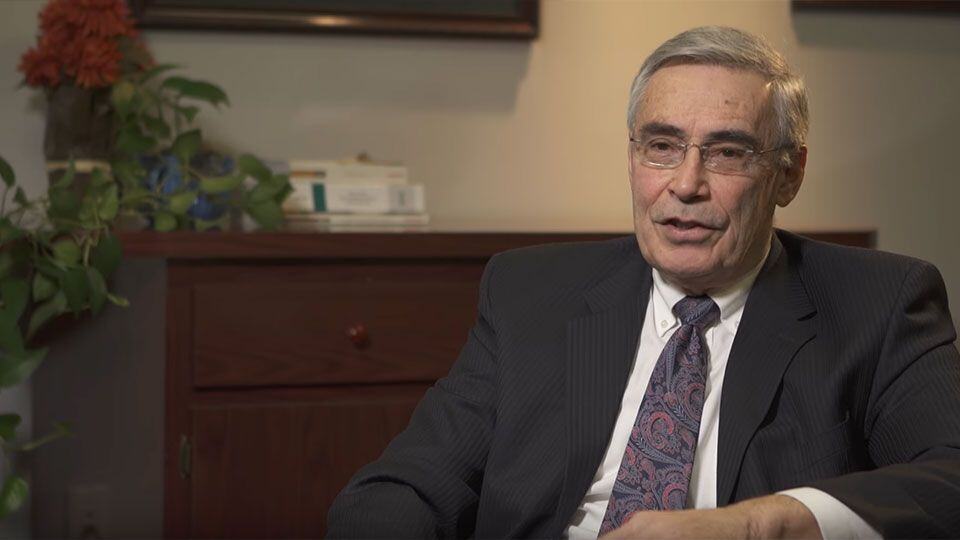
Radiology is a multi-faceted, high-volume operation at University Diagnostic Medical Imaging (UDMI) in the Bronx NY, with hundreds of patients moving through one or more procedures on any given day. The key to this practice’s successful, profitable operation is patient satisfaction and a unique, sophisticated revenue management process. The business administrator behind this operation is Robert Klein.
When Mr. Klein joined the practice in 2005, they were just transitioning from Advanced Data Systems’ (ADS) Medics II system, which the practice had been on since 1995, to the newer ADS platform, MedicsPremier. He was able to help the practice weave together a unique and highly customized set of tools for managing scheduling, workflow and revenue, built around the MedicsRIS family of products, including Scheduler, Workflow, Dictation, Transcription, and claims management. They also utilize MedicsDocAssistant EHR for Radiology. “It is senseless to buy RIS from one vendor and a billing system from another, when the Medics Solutions Suite does it all” said Mr. Klein. “With ADS we acquired a whole and complete solution on which to run the practice.”
MedicsRIS Workflow: Tracking & Managing Each Stage of the Patient Visit
Using the MedicsRIS Scheduler, a staff member assigns an appointment time to the patient and reserves the proper equipment room for each procedure. The real magic happens on the day of the appointment within MedicsRIS Workflow.
MedicsRIS Workflow manages and tracks the patient from the moment of check-in, through insurance verification, then follows the patient as he or she progresses through the appointment. An appointment can involve one or more imaging systems and physician readings. “A patient may come here for multiple exams on the same day,” explained Mr. Klein. “Our challenge is to efficiently coordinate each patient visit across different departments to ensure the patient is seen in the proper sequence and moves through the process without delays.”
Using MedicsRIS Workflow, a staff member or physician can look up a specific patient and see exactly where that patient is in their visit progression whether they are in an imaging room, whether the image has been read by a physician, whether the reading has been transcribed, whether the patient is in consultation with a specific physician. All stages of the visit are tracked, time stamped, color coded and captured by MedicsRIS as the patient moves through their visit.
Workflow is able to collect all this information because it is communicating via HL7 with each piece of imaging equipment through a PACS control center. For example, MedicsRIS Workflow sends an HL7 message to the PACS system telling the control center to put patient Jones in the queue for X-Ray machine 2. When the image has been captured for patient Jones, a message is sent back to the MedicsRIS system enabling Workflow to know exactly when patient Jones left X-Ray-2 room and has moved to the next stage of the visit.
Downstream, a physician uses Workflow’s Physician Desktop to determine which case to read next. “For patients requiring multiple procedures,” said Mr. Klein, “we may need to ensure one image is read before another. We use Workflow to guide our physicians through the proper sequence for each patient exam. Essentially, Workflow controls the lifecycle of the readings by the physicians.”
The reading process includes a case review and all previous information relevant to that case. The physician transcribes their findings and diagnosis using the MedicsRIS transcription capability. The transcription system outputs a digital file, which the physician reviews and digitally signs. At this point, MedicsRIS can automatically fax a copy of the transcribed report to the referring physician.
Billing, Collecting and Business Analysis
When the process delivers a physician-signed report, MedicsRIS Workflow hands off its data to the MedicsPremier billing platform. “Some clinics order their RIS procedures using abstract codes, and then have their billing team reconcile those custom codes to the CPTs,” said Mr. Klein. “At UDMI, when we order an exam, that procedure is identified by the actual CPT code. By the time a patient visit gets to the billing phase, we know exactly what exams have been performed and can use the proper CPTs because the Workflow collected and carried all that data down the line with each patient visit. At the end of the visit, Workflow sends over the CPT codes and the physician report to billing. Any additional codes are then added by our billers.”
UDMI depends on the MedicsPremier to properly format and submit each claim to the respective carriers. “MedicsPremier supports multiple claim output files depending on the interchange used. For us, one of the real values of ADS is that they stay on top of all the government and carrier changes to standard billing, so we are able to send clean claims,” said Mr. Klein.
Revenue management, reporting and the ability to manage patient visit data through one integrated system is, according to Mr. Klein, “one of the strongest reasons we stay with ADS.” At UDMI, the patient episode starts and ends fairly quickly, he explained. “Typically a patient is in and out of our facility within an hour. It’s the other aspects of the business…managing patient authorizations, billing, collections, and business analysis that can take time.”
When it comes to managing the business, it’s the flexibility of the Medics solutions suite that has made a fan of Mr. Klein. ‘I’m of a programming mind. I like to work with a product that enables me to customize the system so it will give me what I need to run our business. The Medics suite is architected so that I can manipulate tables and use fields and structures in ways others don’t. I am able to do things with the system that other may not wish to do.”
One example of this customization capability is how he uses accounts receivable. “We have created a intricate schema out of accounts receivable codes so that we can track the status of each claim by carrier and in some cases by carrier sub group. This enables me to pull reports that tell me where to apply labor to the follow up that needs it most.”
Additionally, Mr. Klein is tracking discrete carrier product variables such as deductibles, co-pays and procedures requiring pre-certifications. He tracks how each carrier has paid by CPT code and by provider. He also uses this data to trend each carrier’s payment performance. Armed with this statistical information, Mr. Klein uses it when negotiating with the carriers.
Another example of how Mr. Klein has used the systems’ customization flexibility is in a unique patient payment system that he created that tells the reception team what each patient will be responsible to pay on the day of their visit. “I’ve taken the MedicsDocAssistant EHR and reconfigured it to support our method of revenue collections. Prior to a patient’s appointment, we do our homework on how this patient exam will be treated by their carrier. We house that information in the MedicsDocAssistant EHR database Now, our reception team can access this information during check-in. For instance, they can see that the patient has a $20 co-pay, 20 percent co-insurance on the following procedures and has an annual deductible with $150 remaining. At that point, patient can be advised that $360 would be due for that visit. We have armed our reception team to support patient knowledge and responsibility at the front end.”
In summary, Mr. Klein boils down the reasons he is committed to ADS to four main points:
Timeliness and flexibility in keeping the ADS system current and running: “Take the conversion from 4010 to 5010,” said Mr. Klein. “We have not had any huge issues, only minor ones. I attribute this to proper planning, testing and implementation on the part of the ADS.”
ADS Responsiveness: “ADS is a “down to earth” where the chief executive and founder is still deeply involved in the day-to-day operation of the company. Because of that we feel confident the product will continue to grow and perform, and the company will remain highly responsive to their client needs.”
The Workflow module: “Workflow is our dashboard to the practice. From this dashboard view, we are able to see all patients in all phases of their encounter. Using this data, I can get reports that show how long it takes a patient to get through our facility, how long it takes a physician to read and dictate their diagnosis, how long it takes to transcribe a report making it easy to identify and address bottlenecks in our process.”
ADS Software Customization: “ADS has created the Medics solutions suite to be highly flexible, yet supportable. Even though I have created numerous custom strategies for capturing and reporting on the data important to UDMI, the Medics solutions suite remains stable through every new product update. This takes smart people. But that is how ADS thinks; they are sensitive to things most other developers are not.”
Get a free personal tour. Seeing is believing.