

Why Your Lab's Best Quarter Still Leaves Money on the Table
Losing revenue between the order and the deposit? See how ADS laboratory billing software checks claims before they go out.
Your lab just posted its best test volume in three years. Collections didn't keep pace. Somewhere between the order and the deposit, revenue is leaking through modifier errors, LCD mismatches, and claims that never cleared a payer edit. Nobody on staff has time to trace where.
That gap isn't a staffing problem. It's structural, and it's about to matter more.
Find out what your lab is leaving on the table
A free Laboratory Performance Review shows where your denials and revenue leaks are coming from. Fifteen minutes, no cost, and you keep whatever we find whether you work with us or not.
The Reporting Window Closed. The Rate Reset Didn't.
Under the Protecting Access to Medicare Act, CMS sets Clinical Laboratory Fee Schedule rates from the weighted median of private payor rates. Labs report that data to CMS. The latest reporting window ran May 1 through July 31, 2026, using payor data from January through June 2025. Those rates take effect January 1, 2027.
There's no reduction in 2026. From 2027 through 2029, CMS says payments can't fall by more than 15% a year for any test. CAP puts the exposure at roughly 800 tests.
Reporting accuracy matters beyond your own submission. Inaccurate reporting can skew the weighted median and lead to disproportionate rate cuts. CMS also typically refreshes rates only every three years, so a distorted median sticks around.
The stakes aren't abstract. ACLA says the first round of PAMA data collection captured fewer than 1% of laboratories. It cut payment rates on 75% of CLFS tests by $3.8 billion over three years.
Noncompliance has its own price tag. CMS can impose civil monetary penalties of up to $10,000 per day, adjusted for inflation, for each failure to report or misrepresentation.
Where the Revenue Slips Out
Generic RCM tools weren't built for lab billing, and the error patterns show it. Three show up first. LCD mismatches. Modifier inconsistencies. Mis-mapped private payer payments. Each one stays invisible until an audit or a denial sends someone looking.
At lab volumes, even a small error rate adds up to real dollars. A missed edit on your busiest panel repeats with every claim until someone catches it.
Why the Cheapest Fix Comes Before the Claim Goes Out
Chasing denials after they happen is the most expensive way to protect lab revenue. Labs that validate claims before submission catch problems while they're still cheap to fix. By the time a payer denies a claim, that window has closed. These six front-end controls are worth auditing this quarter.
- Validate LCD and NCD coverage before submission. A rules engine that checks medical necessity against current coverage policy catches errors a generic RCM tool can't see.
- Audit payer mapping against your contracts. Mis-mapped payments distort your own reporting and the private payor data CMS uses to set rates.
- Standardize modifier logic on high-volume panels. Modifier errors compound fastest on the tests you run most.
- Automate ABN documentation for coverage-uncertain tests. A missing or badly timed Advance Beneficiary Notice can turn a denial into a write-off.
- Watch first-pass acceptance monthly. If you process 10,000-plus claims a month and sit below 97%, you're managing a leak. Trace it now.
- Confirm your platform tracks PAMA reporting fields. A general RCM system has no concept of PAMA, so the burden falls on manual review.
What Changes When the Billing System Understands Labs
Generic RCM software doesn't know what an LCD is. It can't validate ABN documentation at the line level, and it has no concept of PAMA pricing compliance. At lab volumes, those gaps decide whether your clean claim rate protects revenue or quietly erodes it.
ADS built its laboratory billing software with LCD and NCD compliance logic inside the rules engine, not bolted on afterward. It's backed by 49 years of specialty-specific billing experience and a nearly 99% first-pass clean claim rate. Labs that want the work handled can route billing through ADS's outsourced medical billing services. That gives smaller labs access to lab billing specialists without adding headcount.
For a closer look at what to fix now, read our guide to what independent labs should fix before 2027.
The reporting window that shapes your 2027 rate is closed. What happens in your revenue cycle from here is still yours to control.
Get your free Laboratory Performance Review
Fifteen minutes, no cost, and you keep whatever we find whether you work with us or not. We look at where your claims get denied and where revenue is slipping, then show you what it is worth.
Precision Diagnostics, a national toxicology lab, now collects 8%+ more on the same charges with ADSRCM.
Prefer to talk first? Call an ADS lab billing specialist at 1-800-899-4237 ext. 2264, or see the platform in a live demonstration.
This form is protected by reCAPTCHA, and the Google Privacy Policy and Terms of Service apply.
Sources: CMS, Clinical Laboratory Fee Schedule (cms.gov); CMS, PAMA reporting FAQs (cms.gov); College of American Pathologists, PAMA for laboratories (cap.org); American Clinical Laboratory Association, PAMA reform (acla.com); ADLM Clinical Laboratory News, March 2026 (myadlm.org); Health Law Diagnosis, February 2026 (healthlawdiagnosis.com).
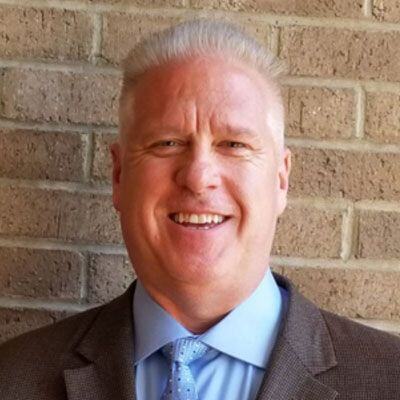
About Jim O'Neill
As the company’s Laboratory Services Business Development Manager, Jim has 30 years’ experience in LIS and financial systems including 20 years as the owner of CSS (Avalon LIS). With a Bachelor’s degree in information technology from Rowan University, Jim has worked / consulted with over 500 labs in the US and internationally in improving their LIS and financial solutions. Jim is genuinely people-oriented and civic-minded; he’s the former Mayor of Northfield NJ and is currently on the town’s council. Feel free to reach out to me at 1-800-899-4237 ext. 2264